
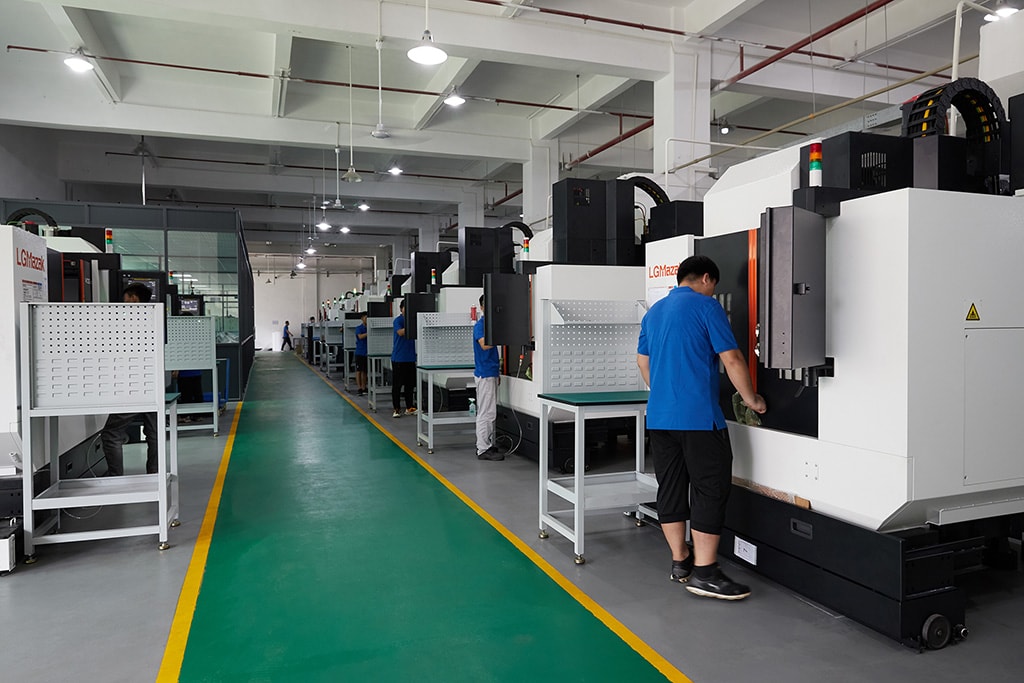
A prototype can be machined, printed, cast, or molded, and the right process depends on what the prototype must prove. A printed part answers shape and fit; a machined part answers material and tolerance; a cast or molded sample answers what a tooled process would produce. The mistake buyers make is choosing a prototyping process by habit or price without asking which question the prototype is supposed to answer, and then scaling the wrong answer into production. This guide sorts the prototyping alternatives for parts made in China: where CNC machining stands among them, when 3D printing and casting-style processes genuinely win, how material narrows the field, and how to sequence a prototype program that ends in production rather than in a drawer of samples.
Why is prototyping process selection different from production process selection?
Production process selection is about the economics of volume: the tooling amortizes, the cycle time repeats, and the per-part cost decides. Prototyping inverts the priorities. There is no volume to amortize tooling, so processes with heavy fixed costs drop out; and the value of a prototype is measured by the information it produces, not the number of parts it ships. A prototype that costs more but proves the production process is worth more than a cheap sample that proves nothing about production.
That reframing changes the alternatives. A process that would never make economic sense at production volume — machining a part that will later be die-cast, for example — is often exactly right for prototyping, because machining carries no tooling and can produce one part in the production-grade material with production tolerance. The prototyping process should be chosen to answer the production question as cheaply as possible, which frequently means machining even when production will use a different process. The question to ask before every prototype order is not "what is the cheapest way to make one?" but "what must this prototype prove for production to start?"
Where does CNC machining stand among rapid prototyping processes?
CNC machining holds a specific position in the prototyping landscape: it is the only process that produces a part from wrought bar stock in the production grade, to production tolerance, with no tooling. Milling and turning hold fit and alignment features to ±0.003 mm, with capability at Cpk 1.67 or higher on key characteristics and Cpk ≥ 1.33 on general characteristics. Capability is reported per characteristic: every report names the feature, its tolerance band, the sample size, the sigma method, and the study window and precision grinding reaches ±0.002 mm where needed. A machined prototype carries a material certificate for its actual grade, a dimensional report on its actual features, and a process record that production can repeat, which is why the machined prototype is the standard bridge from design to production for metal parts.
Machining's prototyping weakness is the mirror of its strength: it can only produce geometry a cutter can reach, and it removes material rather than forming it, so it cannot prototype internal channels, undercuts, or organic forms the way additive processes can. For prismatic and turned hardware — housings, brackets, fittings, shafts — those limits rarely matter, which is why machining dominates prototyping for the parts that will eventually be machined in production. When the production process will be casting or molding, the machined prototype still serves a purpose: it validates the geometry and function in the real material before the tooling is committed.
When does 3D printing win, and when does it mislead?
Additive manufacturing wins two prototyping jobs outright. The first is geometry: internal conformal channels, lattices, and one-off organic forms that no cutter can produce are exactly what printing is for. The second is speed and cost on form-and-fit checks, when the printed material is close enough to the production material that shape, clearance, and assembly questions can be answered in days for the cost of a print run. For a plastic housing bound for injection molding, a printed prototype can validate the envelope and the fit before a mold is cut — a genuinely useful step.
Printing misleads when the prototype is asked to prove what printed material cannot. A printed metal part does not carry the material properties of wrought stock, its tolerance and surface finish fall short of machined features, and functional faces need machining anyway, so a printed prototype tells you nothing about how the production part will machine, hold tolerance, or finish. The failure mode is scaling a printed sample into a machined production part and discovering the differences at the first production lot. Use printing for the questions it can answer, and switch to a production-grade machined prototype for the questions it cannot.
When do casting-style prototypes earn their extra steps?
Vacuum casting and rapid investment casting add steps and lead time to a prototype, so they earn their place only when the prototype must resemble a cast or molded production part. Vacuum casting pours a urethane into a silicone mold made from a master — typically a machined or printed part — and suits a small batch of plastic look-alike samples when the production route will be molding. Rapid investment casting produces metal samples with cast material properties, which matters when the production part will be a casting and the prototype must prove the casting's behavior rather than the geometry alone.
Both processes share the same catch: the samples still need machined functional features, because neither holds machined tolerances on critical faces. The buyer should therefore compare the total route — the master, the mold or pattern, the cast part, and the machining — against machining the same features directly from bar stock. When the production volume will not justify production casting tooling, the cast-style prototype is an expensive detour to a part that production will machine anyway; when production will genuinely be cast or molded, the cast-style prototype validates the production process before the tooling commitment.
Which material decides the prototyping process?
Material is the fastest filter in prototyping, exactly as it is in production. A part that must be a specific wrought grade — 7075-T6 aluminum, 17-4PH stainless, Ti-6Al-4V — must be prototyped by machining from that grade, because no printing or casting process delivers the same wrought material with a certificate. A part in a commodity thermoplastic bound for molding can be prototyped by printing or casting, because the prototype's job is geometry and function rather than production material properties. A part in a high-cost engineering polymer that will be machined in production should be machined in the prototype too, so the prototype proves how the material machines and finishes.
The material record travels with the choice. A machined prototype from wrought stock ships with a mill certificate naming grade, condition, and heat — the traceability that regulated industries need and that a printed or cast prototype cannot always match. When the buyer's industry demands material traceability, that requirement alone can settle the prototyping process, because the prototype must establish the record that production continues. Write the material requirement first, and most of the prototyping process debate disappears.
How do the economics and lead times compare on a prototype?
The comparison that matters is not per-part price in isolation but what the prototype proves for the price:
| Process | Best for | Strengths | Limits |
|---|---|---|---|
| CNC machining | Metal parts bound for machined production | Production grade, production tolerance, no tooling, traceable material | Limited to cutter-reachable geometry |
| 3D printing | Form-and-fit checks, internal-channel geometry | Fast, cheap for one part, no tooling, high geometry freedom | Material and tolerance differ from production |
| Vacuum casting | Small batches of look-alike plastic samples | Multiple copies from one master, material options | Master, mold, and finish steps; not production tolerance |
| Rapid investment casting | Metal samples with cast properties | Validates a future cast production route | Pattern, shell, and machining steps; longer lead |
| Bridge tooling / injection molding | When a production mold is already justified | Samples in the true production process | Tool cost and lead — only for real volume |
Read the table as a filter. For a single metal part that production will machine, machining is simultaneously the cheapest process that answers the question and the only one that answers it fully. For a single plastic part checking fit, printing may be cheaper and adequate. For a batch of samples before a trade show or a user test, vacuum casting produces copies from one master. For a part whose production route will be casting, a cast prototype validates the process before the tooling. Each process is right for a different question, and the question is set by the production intent.
Add the indirect cost of iterations to any comparison, because prototypes are rarely ordered once. A machined prototype absorbs a design revision between orders at the cost of a program edit; a printed prototype absorbs it at the cost of a new print run; a vacuum-cast or rapid-cast prototype absorbs it by paying for a new master or pattern each time. When the design is still moving — and most are — the process that makes iteration cheap is worth more than the process that makes a single sample cheap. Machining's revision economics, like its production economics, improve with every round the design survives, which is why it dominates prototyping for parts that will eventually be machined. Model the total across the iterations you expect, not the price of the first sample.
How should a buyer sequence prototyping toward production?
The efficient sequence runs from cheap answers to expensive proof. Start with a form-and-fit prototype on the cheapest process that can answer the geometry questions — often printed for plastics, machined for simple metal parts — and iterate the design until the envelope, the clearances, and the assembly work. Then move to the production-grade prototype: a first article machined in the production material on the production route, with the tolerance, finish, and documentation production will use. This second prototype is the bridge that makes volume a continuation rather than a re-invention.
Where China sourcing is involved, the sequence carries two extra decisions. First, decide which prototypes travel and which do not: a printed form-and-fit part may be made anywhere, while the production-grade first article should come from the supplier who will run production, so its record carries into the production program. Second, when production will use a different process than machining — molding, casting — use the machined prototype to validate the design and freeze the critical features, then let a tooled sample validate the production process before the full tooling investment. The services overview explains the prototyping and finishing range a China machining supplier runs, and the parts guide shows how material, tolerance, and finish translate into a quoted prototype.
How do you compare a CNC prototype quote against an alternative honestly?
Comparing a machined prototype against a printed or cast alternative requires comparing what each one proves, not just what each one costs. Put the alternatives on the same basis: same drawing revision, same material intent, same quantity, and a statement of what each prototype will carry — a material certificate, a dimensional report, or a printed part with neither. A machined prototype quote includes material verification, measurement, and the record that scales to production; a printed quote includes none of those, because printed parts do not carry them. The difference in price is the difference in what the prototype proves.
Ask the supplier to separate the quote into material, machining, and documentation, exactly as you would for production. Ask whether the prototype will run on the same process family production will use, and whether the report format matches production's format. And weigh the reproducibility: the cheapest prototype that cannot be reproduced, or whose process differs from production, is the prototype you will pay to re-prove. The FAQs page covers the tolerances, materials, and process steps a prototyping supplier runs, and the contact page is where a specific part becomes a specific prototyping recommendation across the alternatives.
Frequently Asked Questions
Which prototyping process should I choose first?
Start from the question the prototype must answer. If it is about shape and fit, a printed or soft prototype may be enough. If it must prove material, tolerance, and the production process, machine it in the production grade on the production route — a prototype that cannot scale to production answers the wrong question.
When does 3D printing beat CNC prototyping?
Printing wins for internal channels and geometry no cutter can reach, and for fast, cheap form-and-fit checks when the printed material is close enough to the production material. It loses when the prototype must carry production-grade material properties, tolerances, or surface finish — all of which printed parts lack without machining.
When should I use vacuum casting or rapid casting for a prototype?
Vacuum casting suits a small batch of plastic samples from a silicone mold when you need look-alike copies without production tooling. Rapid investment casting suits metal samples when you need cast material properties. Both still need machined functional features, so compare the total route against machining the same features directly.
Is machining the right process for a metal prototype?
For most metal parts, yes — machining starts from wrought stock with certified material, holds ±0.003 mm with capability at Cpk 1.67 or higher on key features and Cpk ≥ 1.33 on general characteristics. Capability is reported per characteristic: every report names the feature, its tolerance band, the sample size, the sigma method, and the study window and carries no tooling, so one piece is affordable. Casting and forging alternatives need volume to justify tooling and are usually prototyped by machining anyway.
How does material decide the prototyping process?
Write the production material first, then keep the processes that can deliver it. A 7075 or stainless machined component should be prototyped by machining in that grade. A commodity plastic bound for molding can be printed or cast to validate form and function before the tool is cut.
How do prototype costs compare across processes?
For one part, printing is often cheapest when it answers a form-and-fit question. Machining is economical for one or a few metal parts because there is no tooling. Vacuum casting and rapid casting add mold or pattern steps that only pay back across a small batch. Include what the prototype must prove, not just its price.
How do I sequence prototyping toward production?
Start with a form-and-fit check on the cheapest process that answers it, then move to a production-grade first article machined in the production material on the production route, with the documentation production will use. The production-grade prototype is the bridge that makes volume a continuation rather than a re-invention.
Weighing CNC prototyping against an alternative and need a straight comparison?
Send the model and production intent to [email protected] or call +86 13126536955 — the recommendation will state what each process proves and which prototype actually scales to production.