
How Much Does CNC Prototyping in China Cost in 2026? A Buyer's Cost Model
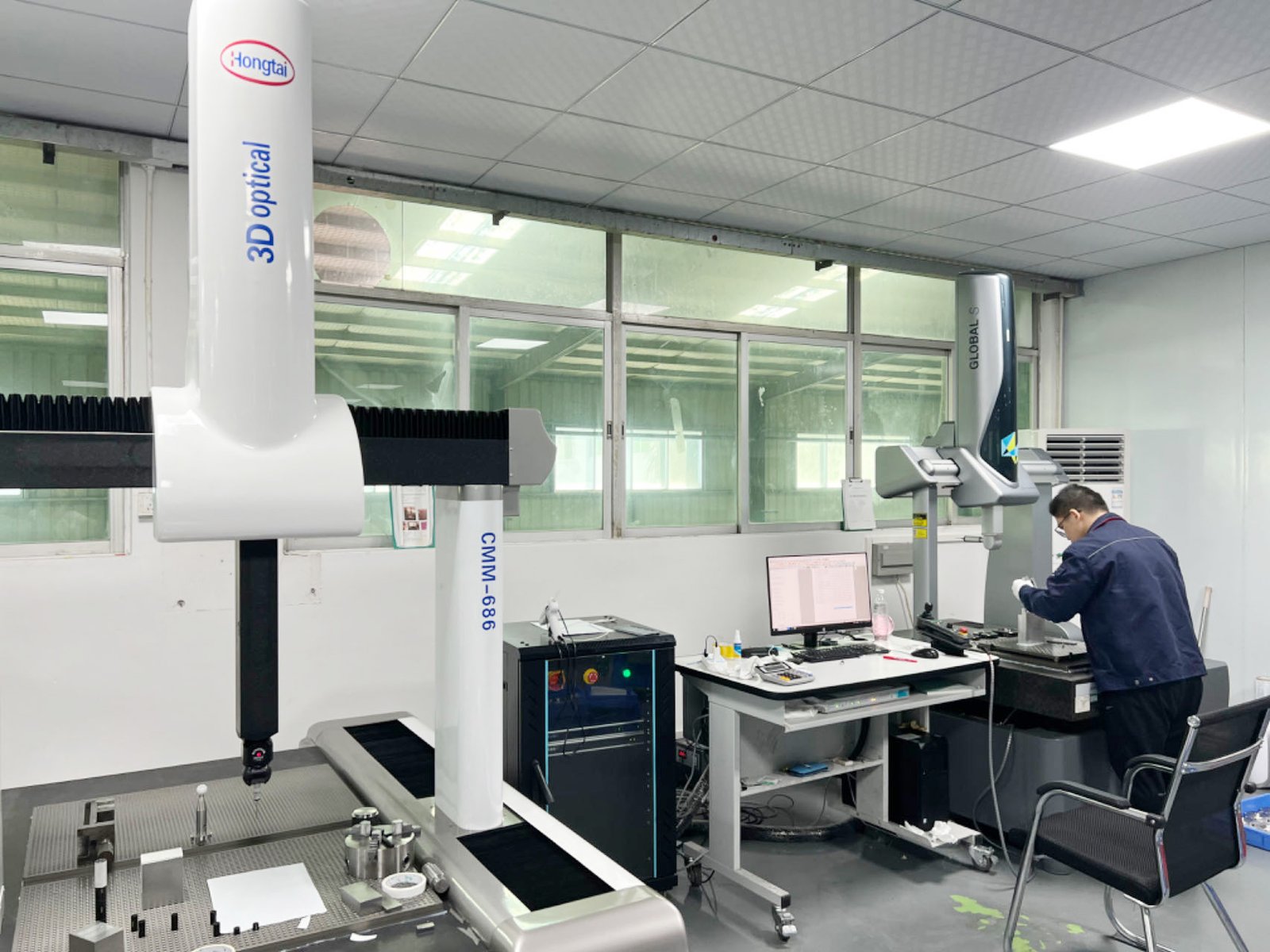
A prototype is the most expensive part you will ever order per piece, and the cheapest mistake you will ever get the chance to make. Its per-part price is high because the setup, the programming, and the first-article measurement land on a single piece; its real value is that a flaw found now costs a keystroke, while the same flaw found after tooling and production costs a program. Sourcing a prototype from China adds two more decisions: whether the prototype is production-grade enough to prove the process, and whether the traceability it carries is strong enough to reproduce.
What does a CNC prototype quote actually pay for?
Strip any serious prototype quote back to its bones and the same lines appear underneath the formatting, with the fixed costs landing at full weight on a quantity of one.
| Line item | What it pays for | What moves it |
|---|---|---|
| Material | The bar, plate, or block at the grade on the drawing | Grade, form, and whether the lot is verified against a mill certificate |
| Setup and programming | Fixturing, toolpath work, and first-piece prove-out | The line that makes a one-off look expensive — it is the same setup production will use |
| Machining time | Spindle minutes to cut the features and hold the tolerances | Material machinability, feature count, and tolerance per feature |
| First-article inspection | CMM time and the dimensional report on the first part | Proves the drawing is machinable and the process is capable before you commit volume |
| Traceability record | Raw lot, process, machine, batch, operator, and inspection data | What makes the prototype reproducible instead of a one-off accident |
| Finishing and secondary operations | Anodizing, plating, and similar steps on the prototype | Validate the finish on one part before it repeats on a thousand |
There is no honest single number for a CNC prototype, because the drawing, the material, and the production intent decide it together. What stays consistent is the structure, and the structure is what separates a prototype you can scale from a sample you cannot reproduce.
Why is the prototype where the production cost gets decided?
A prototype is not the end of a design — it is the first piece of production, priced at a quantity of one. The setup and the program that make it expensive are the same setup and program that production will amortize, so the prototype quote is a window into the production price: read the setup line, and you can see what the per-part cost will become as quantity rises. That is why the cheapest route to a low production price is a prototype budget spent on the right decisions now.
The index of this site frames the tolerance decision exactly this way: pick the tolerance your part actually needs, because each tolerance tier carries a cost that repeats across every production part. A prototype that validates a looser band on a feature that does not earn a tight one has saved money on every future part, not just on the prototype. The same logic runs through the finish callouts and the material grade — every decision locked on the prototype is a decision repeated in production. Budget the prototype as an investment in the production cost curve, not as a one-off expense.
Why does traceability decide whether a prototype is worth anything?
The hub of this site makes the argument that matters most: a prototype without a traceability chain is a part, not a proof. The questions a buyer should be able to answer from the prototype's record are the ones that make it reproducible — was the alloy the one you specified, verified against a mill certificate? Was the process stable, or did the machinist chase a drifting dimension? Which machine, which operator, which batch ran the part, and what did the CMM measure? An integrated MES/ERP system answers those questions by linking raw lot, process, machine, batch, operator, and inspection data to the part, not by paperwork and memory.
The cost logic is simple: a traced prototype converts into a production run; an untraced one forces you to re-prove everything on the first production lot. When the prototype carries its traceability record, the production run starts with the process already documented, the material already verified, and the inspection data already attached, which is why the traceability line on a prototype quote is the line that pays for itself at the first production order.
Which material should a prototype budget assume?
Material moves a prototype quote twice: once as stock, and again as machinability at the cutting edge. Aluminum 6061 is the economical default for housings and brackets; the free-machining grades keep parts economical where the application allows; and the demanding grades — 304 and 316 stainless, titanium, and the heat-treatable steels — run slower and cost more on every feature. But a prototype is where you should prototype the real grade, not a stand-in, because the production part will run in the production material.
Two rules keep the material line honest on a prototype. First, name the grade and verify the shop checks the lot against its mill certificate — every incoming lot on this floor is XRF-verified against its mill certificate at the door, so the prototype proves the actual alloy you will specify in production. Second, read the mill certificate and the XRF result as two different documents: the certificate proves what the mill says the lot is, and the XRF proves what the spectrometer measures in the bar you received. A prototype validated on the verified material is a prototype whose production grade is already proven.
How much do tolerance and finish move a prototype quote?
Tolerance is the steepest part of the machining cost curve, and on a prototype the decision is about the future, not the one part. Milling and turning hold ±0.003 mm on critical features, and precision grinding reaches ±0.002 mm, verified on Hexagon CMMs with process capability at Ppk ≥ 1.67 at the initial study on key characteristics and Cpk ≥ 1.33 on general characteristics. Capability is reported per characteristic: every report names the feature, its tolerance band, the sample size, the sigma method, and the study window. And a demonstrated Cpk of 1.851 on a representative length characteristic. The prototype proves the process can hold the band on the real geometry, which is the evidence you need before production, not after.
Read the tolerance band before you read the index. Cpk is a ratio of the tolerance band to the process spread, not an absolute measure of accuracy. The figure above was recorded on a length characteristic with a 0.4 mm band (76.1–76.5 mm) — wide by design. Hold the same process spread against a ±0.005 mm feature and it fails outright. Ask for the band, the subgroup count and the sampling window on every capability number a supplier quotes.
Finish follows the same rule. A surface finish callout (Ra) changes what the process must deliver, and validating the finish on the prototype tells you what production will hold on every part. Put the tolerance and the finish on the drawing the way production will see them, and the prototype answer is the production answer. Change them after the prototype, and you have paid for a prototype that did not prove the part you actually plan to build.
How does quantity enter a prototype budget?
The MOQ is one piece, and that is the point: a single prototype lets you validate the design, the process, and the supplier before committing to volume. The setup that makes the one-off expensive is the setup production will amortize, so the prototype quote and the production quote belong on the same page. Budget three quantities together: the prototype at MOQ 1 to prove the part, the bridge quantity that exercises the fixtures before you commit volume, and the production tier where the fixed lines amortize.
And because this floor prototypes and produces under one roof — 6,800 m², 100+ people, 100+ machines across 3-axis (50+), 4-axis (20+), 5-axis (20+) milling, 25+ lathes, and 7+ grinders — the prototype runs on the same machines and under the same traceability system as production. The part you validate is the part that repeats, and the record that starts on the first article is the record production continues. A prototyping supplier that cannot produce the follow-on volume is selling you a sample, not a path to production.
What hidden costs sit inside a prototype quote?
The visible lines are half the price; the other half hides in what the quote does not say. A prototype quote that prices the part but not the traceability record has hidden the proof that it can be reproduced. A quote that absorbs first-article inspection into the margin has hidden the dimensional report you will need to sign off. A quote that runs the prototype on different machines than production has hidden the process change you will discover at the first production lot. A quote that lists a grade family instead of a grade has hidden the alloy it assumes. And a quote from a supplier that cannot name its machines, its measurement, or its certificate numbers has hidden the verification that makes a prototype trustworthy.
The supplier itself is the largest hidden cost of all, and for a prototype, the question is whether you are buying from a factory or from a brokered desk. The brand behind this site is Dongguan Zhuohang Ltd, incorporated in 2005, registration number 91441900MA4UWT6X39, running the 6,800 m² facility described above with an integrated MES/ERP traceability chain, not a brokered desk. Its certificates carry numbers a buyer can verify: ISO 9001:2015 (116024/A/0001/UK/En), IATF 16949:2016 (product design excluded) (131941/A/0001/SM/En), and ISO 14001:2015 (116024/B/0001/UK/En). When the entity, the floor, and the records are checkable in writing, the margin stays in the quote where you can read it.
How do you compare two prototype quotes on the same basis?
A quote you can compare states its assumptions, and on a prototype the most important assumptions are about production. Make sure every supplier shows the material grade and how the lot is verified, the process route and the machines the prototype will run on — and confirms those are the same machines production will use — the tolerance and finish it will hold per characteristic, the first-article inspection and traceability record that ship with the part, and the production tier price on the same page as the prototype price.
Compare the itemized routes at the quantity you actually plan to order, because the prototype price and the production price are two ends of the same curve, and a quote that shows only the prototype end has hidden the setup cost you will pay again, or the production price you cannot see. And weigh the price against the reproducibility in the same breath. The lowest prototype quote is rarely the lowest program cost: the sample that cannot be reproduced, or that runs on a different process than production, is the sample you will pay to re-prove at the first production lot.
How do you build a 2026 prototyping budget that holds?
Build the budget the way this site qualifies a prototype — production intent first, traceability second, quantity third.
- Send the drawing with the production intent stated. Mark the function-critical features, the target volume, and the finish and tolerance the way production will see them. A prototype quoted against the production drawing is a prototype that answers the production questions.
- Get the DFM review and the tolerance conversation together. Ask which features are tighter than the function needs, which tolerances can move to a looser tier, and which finish callouts add a process production will repeat on every part. Fix the drawing first; then budget the fixed part with its production-ready route.
- Quote the prototype, the bridge, and the production tier on the same page, with the traceability record included. The prototype at MOQ 1 proves the part, the process, and the supplier; the bridge exercises the fixtures; the production tier shows where the fixed lines amortize. Budget all three at your real quantity, and the 2026 number will survive the first production run.
Keep the closing rule in front of you: read the prototype quote as the first piece of production, not a one-off, and the prototyping budget you build will buy a part you can actually scale.
Frequently Asked Questions
How much does CNC prototyping in China cost in 2026?
No honest shop quotes a prototype without a drawing, because the price is set by the material grade, the process route, the tolerance and finish, the setup, and the quantity. A simple 6061 bracket prototype sits low; a complex part in a demanding grade with tight tolerance, a finish, and a full traceability record sits far higher. Budget the prototype as the first piece of the production run.
Why is a prototype so much more expensive per piece than production?
Because the setup, the programming, and the first-article measurement land on a single piece, while production spreads those fixed costs across the run. The prototype quote is a window into the production price — read the setup line and you can see where the per-part cost will go as quantity rises.
Why does a prototype need a traceability record?
Because a prototype without a traceability chain is a part, not a proof. The raw lot, process, machine, batch, operator, and inspection data are what make it reproducible — a traced prototype converts into a production run; an untraced one forces you to re-prove everything on the first lot.
What tolerances can you hold on a prototype?
Milling and turning hold ±0.003 mm on critical features, and precision grinding reaches ±0.002 mm, verified on Hexagon CMMs with process capability at Ppk ≥ 1.67 at the initial study on key characteristics and Cpk ≥ 1.33 on general characteristics. Capability is reported per characteristic: every report names the feature, its tolerance band, the sample size, the sigma method, and the study window. And a demonstrated Cpk of 1.851 on a representative length characteristic.
Can a prototype supplier also produce the follow-on volume?
This floor prototypes and produces under one roof — 6,800 m², 100+ people, 100+ machines — so the prototype runs on the same machines and under the same traceability system as production, and the MOQ of 1 piece starts the record the production run continues.
Which company and certificates back the quote?
The brand behind this site is Dongguan Zhuohang Ltd (registration 91441900MA4UWT6X39), incorporated in 2005, at a 6,800 m² facility with 100+ people and 100+ machines, certified to ISO 9001:2015, IATF 16949:2016 (product design excluded), and ISO 14001:2015 with verifiable certificate numbers.
Want a prototype quote that prices the path to production?
Email the STEP or IGES model, the material grade, and the toleranced 2D drawing to [email protected] or call +86 13126536955. You will get a design-for-manufacturing review, the traceability record the part will carry, and prototype, bridge, and production tiers on the same page.