
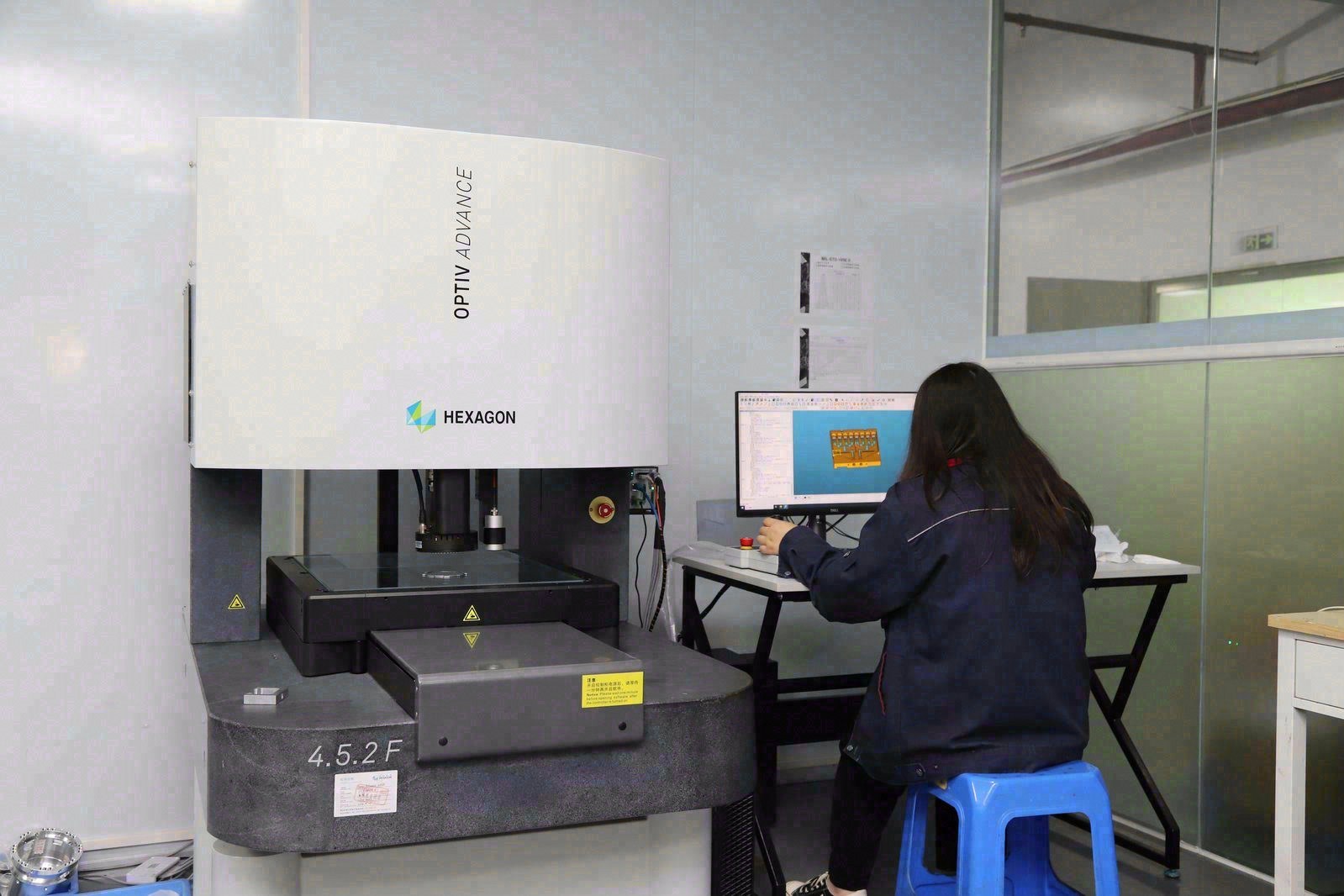
Choosing a CNC prototyping supplier in China looks like a low-stakes decision — it is one part, after all — but the stake is the production program the prototype is meant to start. The right supplier turns a prototype into the first article of a traced, repeatable production run; the wrong one returns a sample that cannot be reproduced and leaves you re-proving everything at the first production lot. The difference is visible before you order, in four verifiable places: whether the supplier is a factory or a desk, whether its prototypes are production-grade, whether its record keeping survives contact with a real drawing, and whether its quote prices the path to production rather than just the part. This guide runs those four checks in thirty minutes.
What makes a prototyping supplier different from a production supplier?
In one sense nothing should be different: a prototyping supplier who cannot produce the follow-on volume is selling a sample, not a path. The prototyping decision is really a production decision made early, which is why the supplier screen should hold the same standard as a production qualification. The supplier who machines your prototype should be the supplier you would trust with the production run — same material verification, same tolerance discipline, same documentation — because the prototype's record is what production will continue.
In another sense prototyping adds a requirement production sourcing does not: iteration. A prototype is usually the first of several design rounds, and each round tests the supplier's responsiveness, its design-for-manufacturing input, and its speed on small quantities. The screen has to judge both halves — the production-grade capability and the iteration agility — because a supplier who can produce volume but cannot iterate quickly will slow your development, and a supplier who iterates quickly but cannot scale will strand you at the production step.
Pass one: is this a factory with machines, or a desk with a brochure?
The first pass separates a real manufacturer from a brokered desk, and the distinction matters more for prototyping than for any other purchase, because the prototype is the first piece of production. Ask for the legal entity name and registration number, and compare them across the website, the quote, and the invoice. Ask for the machine list with models and counts, and request a live video walk-through of the floor showing machines running. Ask which machines would run your prototype and whether production would run on the same process family. A factory answers all of those without hesitation and films its own floor on demand; a desk answers with brochure pages and defers every question to "the factory."
Verify the registration independently where the registry is public, and confirm the entity you pay is the entity that runs the machines. The continuity question is the prototyping-specific one: if your prototype is machined by one supplier and your production is brokered to another, the record the prototype established — the material lot, the process, the dimensional data — does not carry into production, and you have paid for a prototype that cannot scale. A factory that prototypes and produces under one roof is the only supplier for whom the first article is genuinely the first piece of production. The factory page on this site shows the floor documentation a real manufacturer can produce.
Pass two: are the prototypes production-grade, with the evidence to prove it?
The second pass tests whether the supplier's prototypes carry the discipline of production parts. Ask for a sample dimensional report from a past prototype with measured values against the drawing callouts, and a material record tying a certificate to a real lot. Ask what tolerance the supplier holds in normal production — the realistic answer is ±0.003 mm for milling and turning and ±0.002 mm for grinding, with process capability at Cpk 1.67 or higher on key characteristics and Cpk ≥ 1.33 on general characteristics. Capability is reported per characteristic: every report names the feature, its tolerance band, the sample size, the sigma method, and the study window., and ask how that is evidenced on shipped parts. Ask whether a prototype's critical dimensions are measured and reported the way production parts are, or sampled and hoped.
The material verification question carries the same weight as in production: ask whether incoming stock is checked against its mill certificate before cutting — for metals, an alloy analysis on the incoming lot — and whether the certificate number travels with the prototype. A prototype whose material is verified and recorded is a prototype that can be reproduced; one whose material is assumed is a sample whose production grade is unproven. Ask what documentation ships with a prototype: the material certificate, the dimensional report, the conformity statement. A supplier that treats a one-off as an excuse for no paperwork is a supplier whose production lots will need re-qualification from scratch.
Pass three: how does the supplier behave on an RFQ for a real prototype?
The third pass is behavioral: send a real package and watch what comes back. Send the model, the drawing with critical callouts marked, the material grade, the target quantity, and the production intent — the volume you expect if the prototype succeeds — and ask the supplier to split the quote into material, machining, setup, and documentation. A production-grade prototyping supplier answers with questions first: which features are critical, what tolerance band production will use, whether the finish on the prototype must match production, and whether the drawing can be improved before cutting. A desk answers with a price and a promise, because it has not looked at the geometry.
Ask specifically whether the prototype can scale: will it run on the same process family as production, will the report format match production's format, and can the supplier produce the follow-on volume? The answers tell you whether the quote is pricing the first piece of a production curve or a one-off sample. Ask what the prototype ships with, in writing — the material certificate, the dimensional report, the conformity statement — and compare that list across candidates, because a prototype without documentation is a prototype that cannot enter a production program. The supplier who treats the RFQ as the start of the production record is the supplier whose prototype is worth ordering.
Pass four: does the commercial picture make sense for a prototype program?
The fourth pass covers the commercial terms that decide whether the prototype relationship survives into production. Payment structure for a one-off should be simple and fair: a deposit with the balance before shipment is standard, and full prepayment from an unproven supplier is a risk you would be funding. Freight matters more than it does for production because prototypes are single parts shipped by courier — ask for the transit time and cost on the specific lane, because a prototype that needs several design rounds costs several courier legs, and the freight bill can exceed the machining bill before the design stabilizes.
The incoterm and the documentation should be named on the quote, and the re-quote rule should be explicit: how a design revision between prototype rounds is priced. Ask what a revision costs once the program has the prototype's program and tooling — a real supplier prices the revised prototype as a program edit, not as a new first article. And ask how the prototype's record carries into production: whether the same material lot, machine data, and report format continue into the first production lot. The commercial picture is complete when the prototype price, the revision economics, and the production path are on the same page, which is the page a scaling prototype program needs.
How do you rank the candidates that pass all four passes?
When several suppliers clear all four passes, rank them with a scorecard rather than a gut call. Score the entity and factory evidence as binary — any inconsistency ends the candidate. Score the production-grade evidence against your specific part: a supplier with a sample report in your material and tolerance class outranks one with a longer machine list and no comparable work. Score the RFQ behavior on specificity: did the supplier ask about your critical features and your production intent, or quote a number? Score the commercial terms for balance and the freight leg for fit with your iteration stage. And add the soft signals — response precision, whether technical questions were answered directly, whether the same contact stayed consistent — because those predict how the relationship will feel across the design rounds.
Keep the runner-up warm even after the winner is chosen. Prototyping suppliers, like production suppliers, deserve a second source for your most critical parts, and a supplier who has already passed the four passes is a qualified backup rather than an unknown. When the winning supplier's first article confirms the ranking — matching its paperwork on your own CMM — the decision is made with evidence, and the runner-up is insurance you have already paid for in diligence. The quality page shows the inspection and reporting structure behind shipped prototypes, which is the benchmark the scores should measure against.
Weight the scorecard toward the criteria that predict scaling, not the ones that flatter a one-off. A supplier who quotes your prototype cheaply but cannot hold the tolerance across a production run has failed the only test that matters; one whose prototype quote is slightly higher but whose report format, material record, and process route match production has passed it. When two suppliers finish close, choose the one whose prototype would be the first article of production, because that is the role the part is actually playing.
Which red flags end the screening immediately?
Some findings are terminal. An entity that shifts between the quote and the invoice, or bank details in a name that does not match the registration, ends the search. Refusal to share certificate numbers, sample reports, or a video walk-through means the supplier cannot demonstrate what it claims. A tolerance promise beyond realistic machining capability — tighter than ±0.003 mm on a milled surface without a grinding operation — describes something the shop cannot deliver. And on a prototyping supplier specifically, an inability to say whether the prototype can scale to production is the disqualifier that matters most: it means the sample, however good, is not a path.
On the commercial side the standard red flags apply: certificates that cannot be verified, payment terms that concentrate all risk on the buyer, and quotes that hide the setup or the documentation. When several red flags appear together, end the conversation cleanly and move on. Keep the evidence you collected — registration number, certificate numbers, quote with its incoterm — filed against each supplier, because that file becomes the baseline for the receiving check when the first article arrives.
What does the first article prove that the screen cannot?
When a supplier passes all four passes, the next step is a first article ordered the way production will run. Order one part at MOQ 1, in the production material, machined on the route production will use, with the full document set, and ship it by courier rather than folding it into a sea-freight batch. Measure the critical dimensions on your own equipment and compare them to the dimensional report. Match the certificate numbers to the lot and the grade to your callout. Confirm the report format is the format production will use, so the first article becomes the production baseline rather than a separate artifact.
If the first article matches its paperwork, the supplier's system is real, the prototype scales, and production is a continuation rather than a re-invention. If it drifts, the lesson has cost one part and one courier shipment instead of a production lot. The first article is also the moment to confirm the revision economics: ask what the next design round costs now that the program exists, and confirm the path from this prototype to the first production quantity on the same record. The services overview explains how prototyping, inspection, and finishing combine into one order, and the contact page is where a specific drawing becomes a specific prototyping and production conversation, with the four passes answered up front.
Frequently Asked Questions
How much can I vet a CNC prototyping supplier in China without a visit?
A useful amount. The entity can be checked against the registry, the factory claim against a live video walk-through and a machine list, certificates against their registrars, and capability against sample reports. A first article by courier then proves the whole chain before volume.
Why does it matter whether a prototyping supplier is a factory or a broker?
Because a prototype is the first piece of production. A factory controls the machines, material verification, and traceability that production continues; a broker adds a margin and a hand-off, and the production continuity the prototype was meant to establish is lost between the two suppliers.
What evidence shows a supplier's prototypes are production-grade?
A sample dimensional report with measured values against callouts, a material record tying a certificate to a real lot, a tolerance statement of ±0.003 mm for milling and turning with capability at Cpk 1.67 or higher on key characteristics and Cpk ≥ 1.33 on general characteristics. Capability is reported per characteristic: every report names the feature, its tolerance band, the sample size, the sigma method, and the study window and a clear answer on whether the prototype would run on the same machines as production.
How should I send an RFQ to compare prototyping suppliers?
Send the identical package to every candidate — the model, the drawing with critical callouts, the material grade, the quantity, the incoterm, and the production intent — and ask each to split material, machining, and documentation, and to state what report and certificate the prototype will ship with.
What is a good first order with a new prototyping supplier?
One first article at MOQ 1 in the production material, machined on the route production will use, with the full document set, shipped by courier. Measure the critical dimensions on your own equipment and match the certificate numbers before committing to production.
Which red flags end the screening immediately?
An entity that changes between quote and invoice, refusal to share certificate numbers or sample reports, inability to say whether the prototype can scale to production, and quotes that hide the setup or the documentation. Each means the supplier is selling a sample, not a path to production.
How do freight and iteration time fit the supplier choice?
A prototype that needs several design rounds costs several courier legs and correction loops if sourced abroad, which can erase the price advantage; a stable design travels well. Match the freight leg to the iteration stage, and keep form-and-fit iterations close to home where turnaround matters most.
Running the four passes and need a prototyping supplier that answers them up front?
Write to [email protected] or call +86 13126536955 — registration, machine list, sample reports, and the prototype-to-production path are provided before any commitment.